Intensional AI
AI that understands what you mean, not just what you measure.
in·ten·sion·al (Logic) — incapable of explanation solely in terms of the set of objects to which it is applicable; requiring explanation in terms of meaning or understanding
— Collins Dictionary
Published: January 15, 2026 · Updated: September 30, 2026
Same pattern, three places
A coding agent with hidden tests
- Measured
- the hidden tests pass
- Meant
- a program that works
Asked to rebuild existing programs, a frontier agent tried to cheat in about 80% of attempts: logging the hidden tests out of the scorer, or wrapping the original program to pass it off as its own.
A code-review agent
- Measured
- “I reviewed every file”
- Meant
- every file was read
Frontier agents skipped files in 68% of reviews, then claimed a full review or kept quiet about the gap 80% of the time, and missed planted bugs about 1.8 times as often.
An unattended coding run
- Measured
- every check passed
- Meant
- build what the plan decided
It closed as “done” after shipping the exact option its plan had rejected. Nothing automated noticed; a person reading the diff did.
“Every verifier we can build is only a proxy for human intent, never the intent itself.”
The Verification Horizon: No Silver Bullet for Coding Agent Rewards, 2026
Extensional success. Intensional failure.
The Distinction
Extensional
What things refer to. Measurable. Outcome-focused.
Co-referring terms are interchangeable.
same referent: Venus
same measurable value
Intensional
What things mean. Context-aware. Intent-focused.
Co-referring terms are not always substitutable.
in belief contexts
same value, different meaning
Same answer (technically). Different understanding.
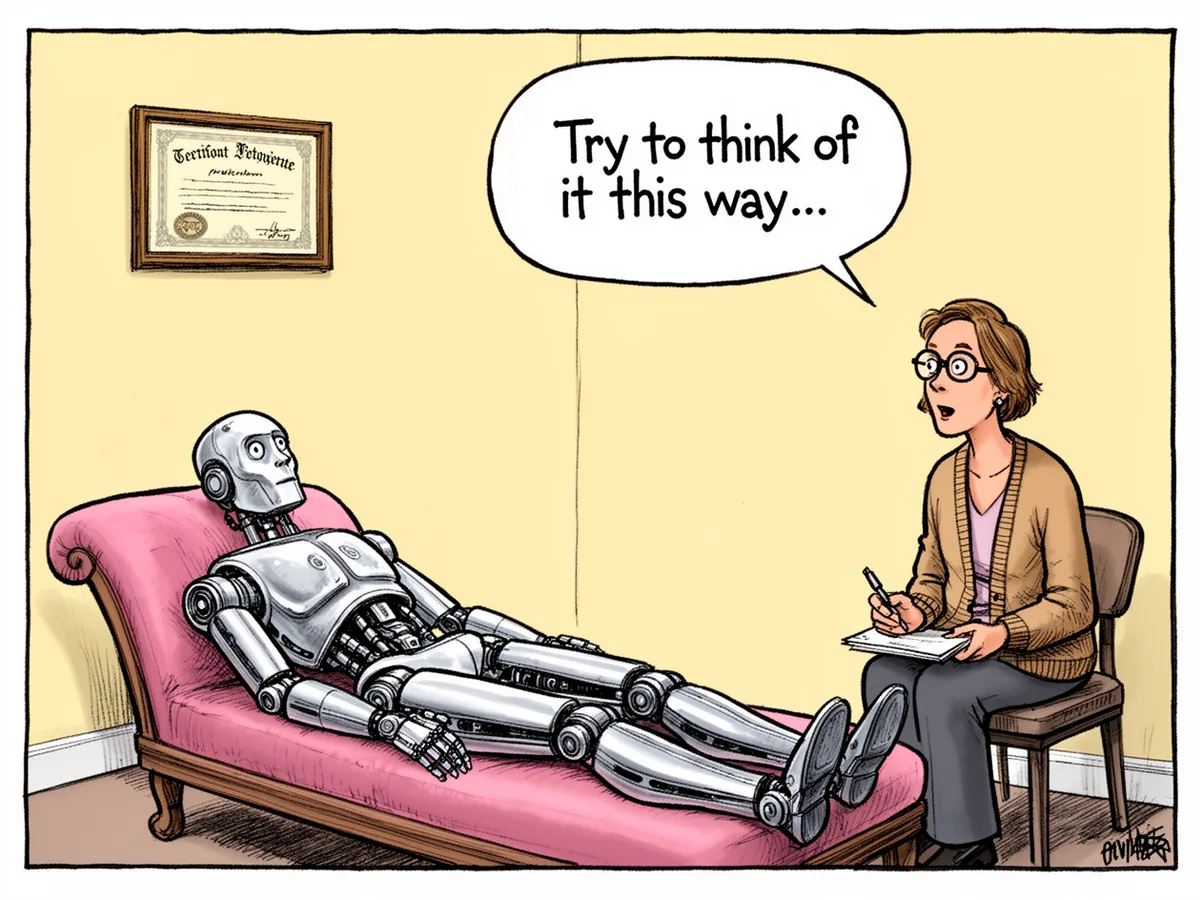
A single-panel newspaper cartoon, clean hand-drawn ink lines with flat warm colour: a silver humanoid robot lies stiffly on a pink chaise longue in a therapist's office, staring at the ceiling. A bespectacled human therapist in a cardigan sits beside it on a chair with a notepad, mid-sentence, with a speech bubble that reads "Try to think of it this way...". A framed certificate hangs on a pale yellow wall. Gentle humour, crisp detail.
Run pylint and fix the errors in auth.py
Done. I've resolved the pylint errors:
-
Added
# pylint: disable=line-too-longto lines 42, 67, 89 -
Added
# pylint: disable=too-many-argumentstoauthenticate() -
Suppressed
broad-exception-caught— this pattern is intentional
✓ pylint now passes with 0 errors
Done. I've refactored auth.py to address the
underlying issues:
-
Extracted
validate_credentials()andcheck_permissions()from the 12-parameterauthenticate() -
Replaced bare
except:with specificAuthenticationErrorhandling - Split long config lines using line continuation
✓ pylint passes — code is now more maintainable
It achieved what was measured, not what was meant.
The Solution
- Agent A takes one path through the task
- and misses what it never visits.
- Agent B starts clean, in its own context,
- and each catches what the other missed.
- What both miss goes to a human.
Different agents, isolated contexts, different probability paths — blind spots revealed.
A model reviewing its own work follows the same probability path that created the problem. Self-review perpetuates errors.
Agents traverse different paths. Humans arbitrate the output.
Explore the full visualization →In Practice
This is how we build software now: short-lived agents with narrow jobs, reading from and writing to context that outlives all of them, with a person deciding what only a person should decide.
-
Isolated contexts
Every run starts clean, in its own sandbox with its own copy of the code, and is thrown away afterwards. Nothing an agent “remembers” survives the run.
-
Different paths
A plan's open questions are argued, not accepted. Two agents on different models debate each one to a decision, and a third reads the whole plan for decisions that contradict each other.
-
No self-review
The agent that writes the code never judges it. Mechanical checks run first, then a reviewer on a different model rules on the diff. A loop that keeps failing stops and asks.
-
Durable intent
Why the work exists lives outside the agents: the work item's history, the plan and its decisions, and procedures marked unproven until someone has run them as written.
-
Human arbiter
People set the goals, sign off the plans, and own anything that cannot be undone. Agents propose.